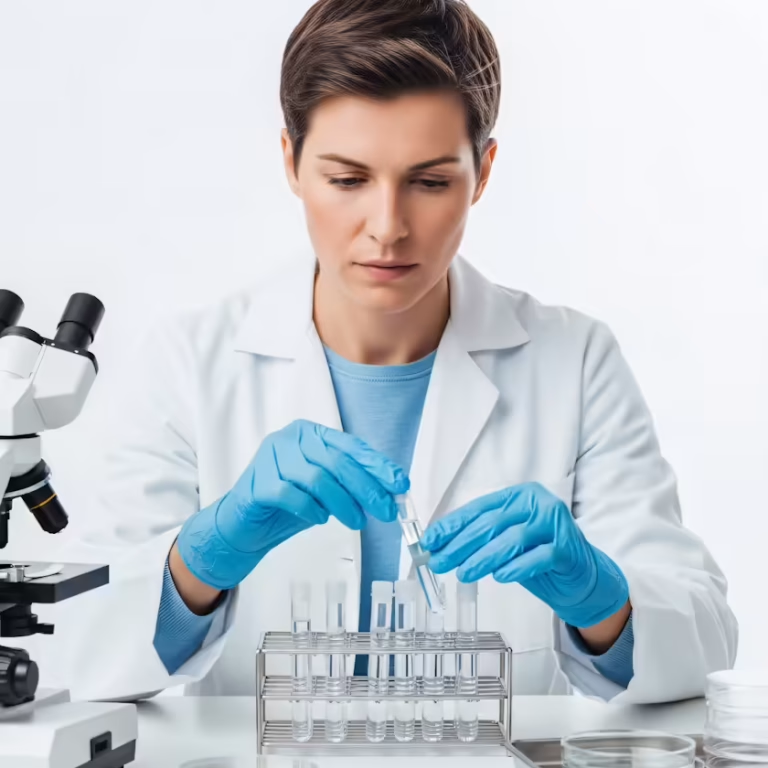





INTEGRATED ACADEMIC STUDIES IN PHARMACY

The science of medicines, health and man. Our mission is to educate the next generation of pharmacists.
LIST OF SUBJECTS
Courses by semester - ECTS credits
| Subject name | Semester | ECTS |
|---|---|---|
| Drug Discovery and Development | 1 | 5 |
| Biology with Human Genetics | 1 | 6 |
| General and Inorganic Chemistry | 1 | 7 |
| Anatomy with Histology | 1 | 6 |
| Analytical Chemistry | 1 | 7 |
| Total ECTS: 31 | ||
| Subject name | Semester | ECTS |
|---|---|---|
| Organic Chemistry 1 | 2 | 7 |
| Fundamentals of Human Physiology | 2 | 7 |
| English language | 2 | 5 |
| Physical Chemistry | 2 | 5 |
| Healthcare Economics | 2 | 5 |
| Total ECTS: 29 | ||
| Subject name | Semester | ECTS |
|---|---|---|
| Pharmaceutical Technology 1 | 3 | 6 |
| Pharmacognosy | 3 | 6 |
| General and Medical Biochemistry | 3 | 6 |
| Pharmaceutical Chemistry 1 | 3 | 6 |
| Pharmaceutical Analysis | 3 | 6 |
| Total ECTS: 30 | ||
| Subject name | Semester | ECTS |
|---|---|---|
| Introduction to Formulation | 4 | 5 |
| Immunology and Microbiology | 4 | 5 |
| Organic Chemistry 2 | 4 | 6 |
| Internship 1 | 4 | 4 |
| Social and Preventive Pharmacy | 4 | 5 |
| Research in Basic Sciences | 4 | 5 |
| Financial literacy in healthcare | 4 | 5 |
| Homeopathy | 4 | 5 |
| Total ESPB (with electives): 25 | ||
| Subject name | Semester | ECTS |
|---|---|---|
| Pharmaceutical Technology 2 | 5 | 6 |
| Pharmaceutical Chemistry 2 | 5 | 6 |
| Pathophysiology | 5 | 7 |
| Bromatology | 5 | 6 |
| Marketing in Pharmacy | 5 | 5 |
| Total ECTS: 30 | ||
| Subject name | Semester | ECTS |
|---|---|---|
| Phytochemistry | 6 | 6 |
| Pharmacology 1 | 6 | 6 |
| Internship 2 | 6 | 4 |
| Biopharmaceutics | 6 | 4 |
| Bioinorganic chemistry | 6 | 5 |
| New drug delivery systems | 6 | 5 |
| Pharmaceutical Healthcare for Special Populations 1 | 6 | 5 |
| OTC preparations | 6 | 5 |
| Total ESPB (with electives): 25 | ||
| Subject name | Semester | ECTS |
|---|---|---|
| Pharmacology 2 | 7 | 8 |
| Toxicology | 7 | 8 |
| Pharmaceutical Biotechnology | 7 | 7 |
| Cosmetology | 7 | 4 |
| Vitamins, minerals, and dietary supplements | 7 | 5 |
| Total ECTS: 32 | ||
| Subject name | Semester | ECTS |
|---|---|---|
| The Skill of Communication with Ethics | 8 | 5 |
| Academic writing | 8 | 6 |
| Internship 3 | 8 | 3 |
| Biopharmaceuticals | 8 | 4 |
| Research in clinical practice | 8 | 5 |
| Industrial Pharmacy | 8 | 5 |
| Pharmaceutical Healthcare for Special Populations 2 | 8 | 5 |
| Human Resource Management in Healthcare | 8 | 5 |
| Total ESPB (with electives): 23 | ||
| Subject name | Semester | ECTS |
|---|---|---|
| Clinical pharmacy | 9 | 8 |
| Pharmacotherapy with pharmacovigilance | 9 | 5 |
| Pharmacoeconomics | 9 | 6 |
| Pharmaceutical Sales Management | 9 | 5 |
| Advanced scientific research techniques | 9 | 5 |
| Total ECTS: 29 | ||
| Subject name | Semester | ECTS |
|---|---|---|
| Interprofessional education | 10 | 5 |
| Internship 4 | 10 | 7 |
| Research paper | 10 | 9 |
| Final paper | 10 | 10 |
| Total ECTS: 31 | ||
Purpose of the PHARMACY study program
The purpose of the Pharmacy study program is to educate experts who possess comprehensive knowledge and skills in the field of health sciences, drug development and control, as well as the rational and safe application of therapy.
The study program prepares students for work in pharmaceutical practice, laboratories, industry, healthcare institutions, and regulatory bodies. Teaching in this study program is organized as integrated studies over several semesters, with clearly defined steps of professional advancement.
The first years of study include fundamental knowledge in the fields of chemistry, biology, physiology, and the basics of health sciences, while from the following semesters, students are introduced to the narrower areas of pharmacy, with a significant presence of laboratory exercises and practical classes.
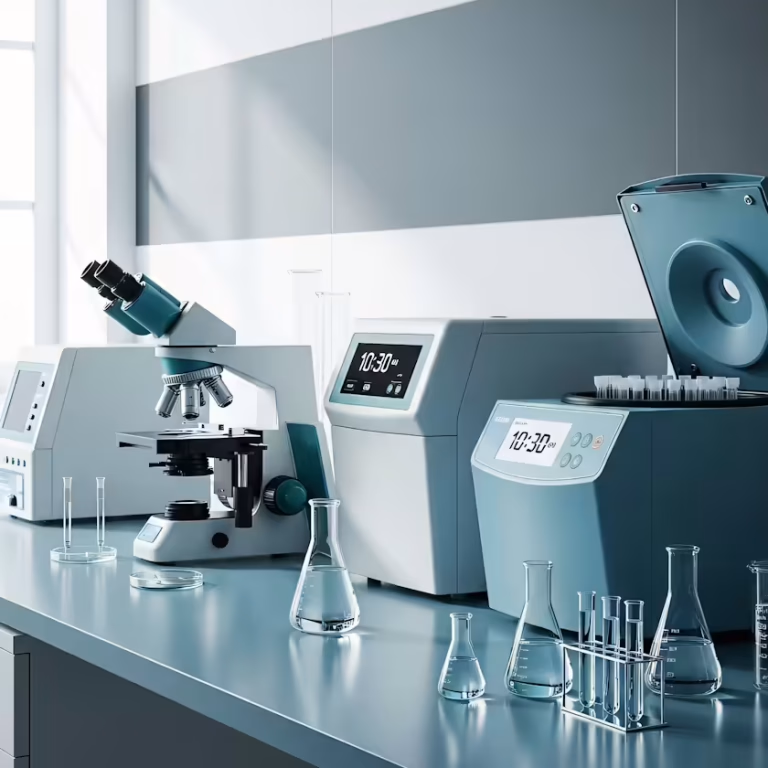
Secured practice.
Internship starts from the second year
From the second year of study, students of the Pharmacy major gain practical experience by working in 19 pharmacies with experienced mentors, many years of master's degrees in pharmacy who are part of the faculty system.
This practice allows students to immediately apply theoretical knowledge, learn how to communicate with patients, and become familiar with the daily work of a pharmacist.
In addition to pharmacies, internships are also carried out in laboratories, hospitals and pharmaceutical companies, under the supervision of experienced mentors and experienced biochemists and cosmetologists, as well as pharmaceutical technology specialists with many years of experience in practice.
Competence
By mastering the PHARMACY study program, the student acquires adequate knowledge, skills, abilities and attitudes in the field of health and pharmaceutical sciences and acquires general competencies for:
- collection, analysis and systematization of theoretical and practical problems in the field of pharmaceutical practice, drug control and health care, as well as the application of acquired knowledge in solving these problems,
- mastery of basic fundamental disciplines in chemistry, biology, biochemistry, physiology and pharmacology at the level expected of experts in the field of pharmacy,
- application of acquired knowledge in the processes of development, production, quality control and rational use of medicines,
- using professional literature, analytical, laboratory and research tools in the process of testing substances, pharmaceutical forms and biological materials,
- application of scientific methods and procedures in research through independent or team work,
- implementation of professional, organizational and safety measures for work in laboratories, pharmacies and industrial environments,
- all aspects of teamwork while applying the principles of professional responsibility, ethics and safe patient care.
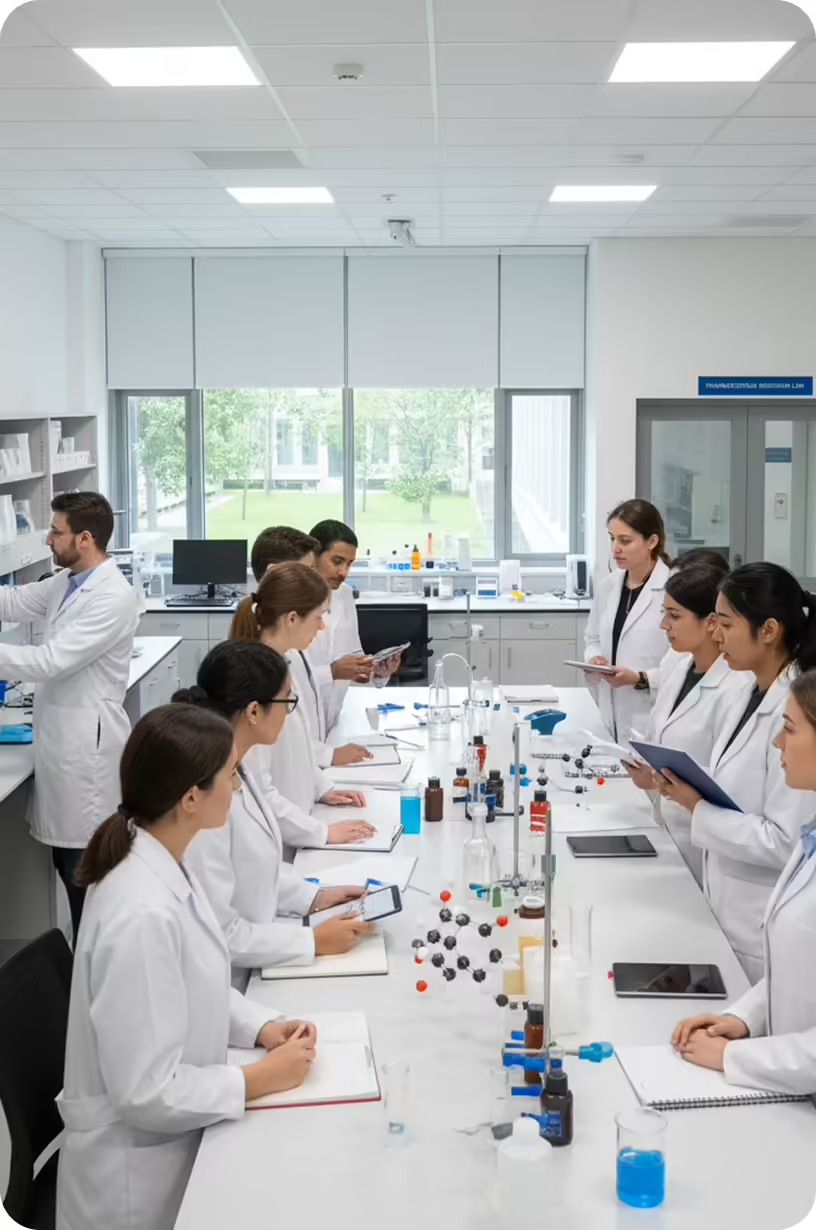
Where do pharmacists work?
Upon completion of the integrated studies of the Pharmacy study program, the student acquires the professional title of Master of Pharmacy. Graduate pharmacists can work in various areas of the healthcare and industrial sectors:
- state and private pharmacies
- hospital pharmacies
- pharmaceutical industry, development, quality control and production of drugs
- scientific research centers
- government institutions and regulatory bodies
The acquired knowledge enables continued professional development in master's and specialist studies in the country and abroad.