

INTEGRATED ACADEMIC STUDIES: PHARMACY – MEDICAL BIOCHEMISTRY
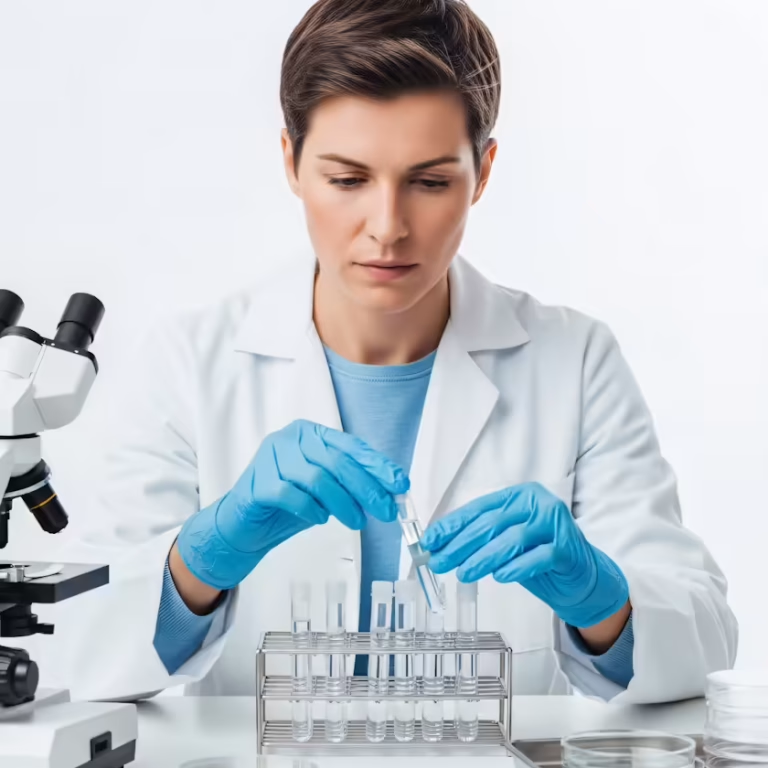
This major combines pharmacy and medicine through laboratory work and the analysis of biological samples, the foundation of modern diagnostics and therapy.
LIST OF SUBJECTS
Courses by semester - ECTS credits
| Subject name | Semester | ECTS |
|---|---|---|
| Drug Discovery and Development | 1 | 5 |
| Biology with Human Genetics | 1 | 6 |
| General and Inorganic Chemistry | 1 | 7 |
| Anatomy with Histology | 1 | 6 |
| Analytical Chemistry | 1 | 7 |
| Total ECTS: 31 | ||
| Subject name | Semester | ECTS |
|---|---|---|
| Organic Chemistry 1 | 2 | 7 |
| Fundamentals of Human Physiology | 2 | 7 |
| English language | 2 | 5 |
| Physical Chemistry | 2 | 5 |
| Healthcare Economics | 2 | 5 |
| Total ECTS: 29 | ||
| Subject name | Semester | ECTS |
|---|---|---|
| Basic Principles of Laboratory Work | 3 | 6 |
| Introduction to Medical Biochemistry | 3 | 6 |
| General and Medical Biochemistry | 3 | 6 |
| Pharmaceutical Chemistry 1 | 3 | 6 |
| Pharmaceutical Analysis | 3 | 6 |
| Total ECTS: 30 | ||
| Subject name | Semester | ECTS |
|---|---|---|
| Introduction to Formulation | 4 | 5 |
| Immunology and Microbiology | 4 | 5 |
| Organic Chemistry 2 | 4 | 6 |
| Internship 1 | 4 | 4 |
| Chemical Management in the Laboratory | 4 | 5 |
| Research in Basic Sciences | 4 | 5 |
| Laboratory diagnostics of doping substances | 4 | 5 |
| Molecular and Cellular Biology | 4 | 5 |
| Total ESPB (with electives): 25 | ||
| Subject name | Semester | ECTS |
|---|---|---|
| General and Medical Biochemistry 2 | 5 | 6 |
| Pharmaceutical Chemistry 2 | 5 | 6 |
| Pathophysiology | 5 | 7 |
| Bromatology | 5 | 6 |
| Marketing in Pharmacy | 5 | 5 |
| Total ECTS: 30 | ||
| Subject name | Semester | ECTS |
|---|---|---|
| Sanitary suitability of food and articles of general use | 6 | 6 |
| Pharmacology 1 | 6 | 6 |
| Internship 2 | 6 | 4 |
| Biopharmaceutics | 6 | 4 |
| Bioinorganic chemistry | 6 | 5 |
| New drug delivery systems | 6 | 5 |
| Diagnostics in Oncology | 6 | 5 |
| OTC preparations | 6 | 5 |
| Total ESPB (with electives): 25 | ||
| Subject name | Semester | ECTS |
|---|---|---|
| Pharmacology 2 | 7 | 8 |
| Toxicology | 7 | 8 |
| Pharmaceutical Biotechnology | 7 | 7 |
| Clinical Immunology | 7 | 4 |
| Vitamins, minerals, and dietary supplements | 7 | 5 |
| Total ECTS: 32 | ||
| Subject name | Semester | ECTS |
|---|---|---|
| Clinical Enzymology | 8 | 5 |
| Academic writing | 8 | 6 |
| Internship 3 | 8 | 3 |
| Laboratory Endocrinology | 8 | 4 |
| Research in clinical practice | 8 | 5 |
| Industrial Pharmacy | 8 | 5 |
| Diagnostics in Hematology | 8 | 5 |
| Specialized laboratory tests | 8 | 5 |
| Total ESPB (with electives): 23 | ||
| Subject name | Semester | ECTS |
|---|---|---|
| Clinical-toxicological analyses | 9 | 8 |
| Pharmacotherapy with pharmacovigilance | 9 | 5 |
| Standards and Regulations for the Accreditation of Biochemical Laboratories | 9 | 6 |
| Pharmaceutical Sales Management | 9 | 5 |
| Advanced scientific research techniques | 9 | 5 |
| Total ECTS: 29 | ||
| Subject name | Semester | ECTS |
|---|---|---|
| Interprofessional education | 10 | 5 |
| Internship 4 | 10 | 7 |
| Research paper | 10 | 9 |
| Final paper | 10 | 10 |
| Total ECTS: 31 | ||
Medical Biochemistry - A Bridge Between the Laboratory and Clinical Practice
The Pharmaceutical Sciences program in Medical Biochemistry lasts five years (10 semesters) and is intended for students who wish to understand biological processes in health and disease.
The program integrates knowledge from pharmacy, medicine, and biochemistry, enabling students to master the principles of modern laboratory diagnostics, and the analysis of blood, urine, and other biological samples.
Students are trained to interpret biochemical findings and collaborate with physicians in the process of patient diagnosis and therapy.
Secured practice.
Internship starts from the second year
From the second year of study, students of the Pharmacy major gain practical experience by working in 19 pharmacies with experienced mentors, many years of master's degrees in pharmacy who are part of the faculty system.
This practice allows students to immediately apply theoretical knowledge, learn how to communicate with patients, and become familiar with the daily work of a pharmacist.
In addition to pharmacies, internships are also carried out in laboratories, hospitals and pharmaceutical companies, under the supervision of experienced mentors and experienced biochemists and cosmetologists, as well as pharmaceutical technology specialists with many years of experience in practice.
Where do biochemists work?
Graduated pharmacists: medical biochemists can work in:
- clinical-biochemical laboratories of hospitals and health centers
- institutes and centers for public health
- pharmaceutical industry and research centers
- to state institutions and regulatory agencies
- academic and scientific institutions
Their role is crucial in the modern healthcare system—from analyzing samples to interpreting results and assisting physicians in making a diagnosis.